AI Supply Chain: Blackwell Ultra B300 GPUs Discovered in China Telecom Network
Security researchers identified 32 export-restricted Nvidia chips inside a state-owned Chinese telecom provider, prompting the chipmaker to minimize the impact on its global market share.
By Kevin Sanders ·
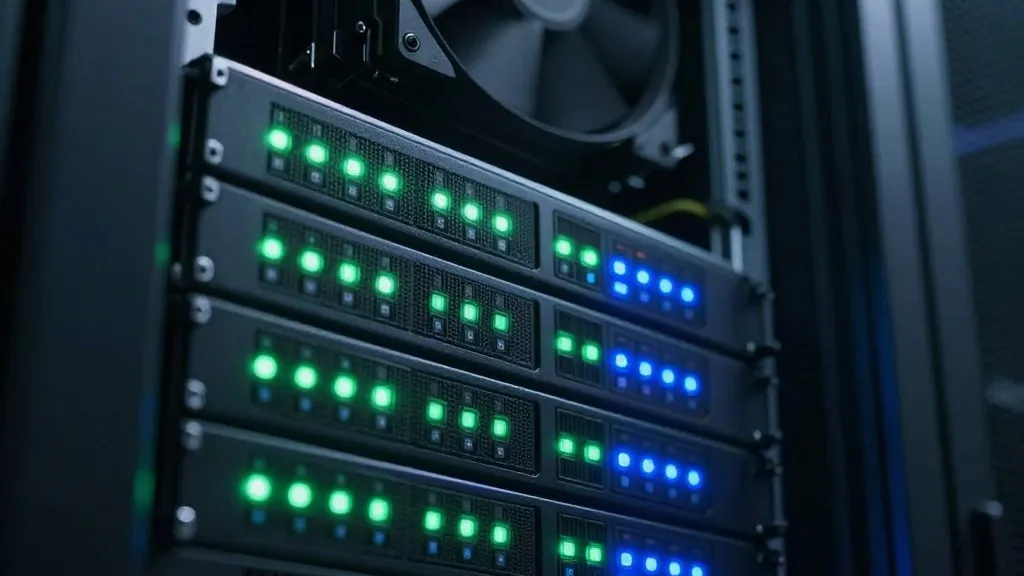
Israeli cybersecurity firm Lava has identified 32 Nvidia Blackwell Ultra B300 graphics processing units within the infrastructure of China Telecom, a state-owned telecommunications provider. This discovery highlights a persistent challenge for the semiconductor industry as U.S. export controls attempt to restrict the flow of high-performance AI hardware to sanctioned entities. The presence of these specific chips, which are barred from direct export to China, raises questions about the efficacy of current regulatory frameworks in the Pacific Northwest and beyond.
The B300 is a top-tier data center GPU designed for advanced AI workloads. According to The Information, these components are restricted to whitelisted buyers who agree not to transfer them to sanctioned parties. Despite these protocols, the chips have appeared in Chinese server racks. This is not the first instance of such leakage; in 2025, reports indicated that $1 billion worth of Nvidia AI chips were smuggled into China in a three-month period. At that time, the B200 model was the primary target, but distributors had already begun preparing for the arrival of the B300 series.
Nvidia has responded to the findings with relative calm, suggesting that the volume of smuggled hardware is negligible compared to the broader market. A spokesperson for the company stated that recent court cases have shown an insignificant diversion of controlled U.S. products, estimating the impact at less than half of one percent. The spokesperson described the situation as a drop in the bucket compared to the ocean of domestic compute capacity China already possesses. Nvidia emphasized that with tens of millions of GPUs in service in approved countries, smuggling remains a non-factor, particularly given the enforcement efforts by governments on both sides of the globe.
The exact method by which the B300 chips entered China Telecom's network remains unclear. Lava confirmed their presence using Nvidia’s DCGM Exporter tool, a software utility intended for monitoring server health and performance. While designed for internal use by data center operators, this tool can sometimes be accessed from outside the local network and does not always require password authentication. Nvidia has acknowledged working on a more robust tool to help locate its chips, but that release is still pending.
The demand for the B300 is driven by its significant performance advantages over its predecessor. Announced in March of last year, the chip offers 50% more memory and FP4 compute capacity than the B200. Nvidia positioned the B300 as hardware built for the age of reasoning, citing its utility in powering sophisticated large language models. Originally expected to ship by the end of 2025, the chip quickly became a sought-after asset in the global AI infrastructure race.
The smuggling of these high-end components has led to legal actions in recent months. In August 2026, nine individuals were indicted in Taiwan for the illegal export of B300 GPUs to China. This followed an internal investigation at Supermicro, which resulted in the termination of several employees. The illicit trade route reportedly involved a Taiwanese server trading firm known as Flying Tiget Tech, which held whitelisted status for purchasing these GPUs.
The scarcity of new AI hardware has also distorted pricing for older generations of Nvidia chips. The A100, a server component now five years old, has seen its price triple, reaching up to $82,000. This price surge reflects the critical importance of Nvidia silicon in AI data centers. In response to the ongoing crackdown on smuggling, some operators have resorted to retooling gaming GPUs to handle AI workloads where possible, further illustrating the tight supply and high demand dynamics in the current market.
Source: Tom's Hardware · original report published
More Business · Business Complaints · Report a business · Got a Story?