Crews Cut Masts From Thames Wreck
The removal protects a WWII ship carrying 1,500 tons of explosives off Sheerness.
By Kenji Yamamoto ·
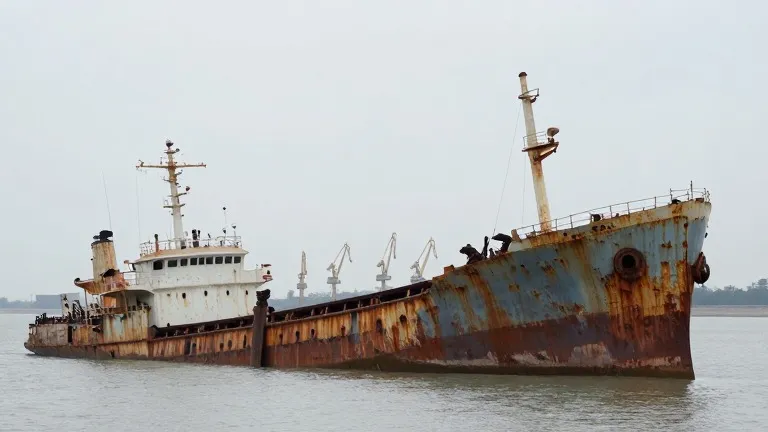
Resolve Marine Group has finished removing the three masts from the SS Richard Montgomery, a World War II cargo ship that ran aground on a sandbar off Sheerness in August 1944 with munitions aboard. The vessel broke apart during salvage efforts and sank about 40 miles from London, leaving an estimated 1,500 tons of explosives in its holds. The masts are gone. The bombs are still there.
Nolan Conway, a naval architect with Florida-based Resolve Marine Group, said the ship had begun to lean, raising the concern that a mast could topple onto the cargo below. "The fear is the masts could have fallen onto the cargo itself, causing it to detonate," he said. Conway added that some of the munitions are believed to carry pressure fuses, so an impact could potentially set them off.
Conway said the hardest part was cutting the masts free without shaking the wreck or putting divers near it. His team built a custom lifting frame to raise each mast without swinging. They also used a remotely operated diamond-wire saw that clamps onto a mast with hydraulic arms and pulls the wire through, keeping people out of the water.
U.K. maritime minister Keir Mather told the House of Commons this week that the work finished ahead of schedule and on budget, with all three masts removed for just under $13 million. He said the masts had put "significant load on the structure," and that taking them off lowers the risk to the site.
The explosives stay put because pulling them out carries its own dangers. Conway said estimates of a blast's reach vary widely, from effects on the shoreline to a tidal wave moving up the Thames to a small event that might only close a nearby shipping channel. "There's a large range of impacts, but none of them are really good," he said. Officials still rate the overall chance of an explosion as low.
The government has kept an exclusion zone around the wreck, which sits about 1.5 miles off the Sheerness coast. Mather said that zone and continuous monitoring will remain in place. The removed masts were sent to the Historic Dockyard Chatham museum for display.
Source: CBS News