Fuel bills jump $36 as Treasury trims growth forecasts
Treasurer Jim Chalmers confirms lower economic projections will accompany the December budget amid rising oil prices.
By Kenji Yamamoto ·
Treasurer Jim Chalmers faces a shrinking margin for error as the cost of living rises and economic confidence wavers. He acknowledged on Friday that Treasury officials are preparing to lower their growth and employment forecasts. These cuts will form part of the December mid-year budget update, replacing his earlier prediction from the previous week that the economy would improve slightly over the next year.
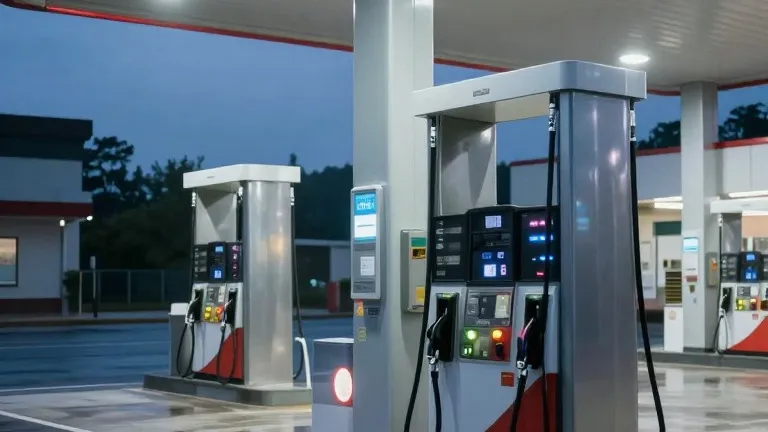
The primary driver is a surge in global oil prices. The international benchmark reached US$113 per barrel overnight, approaching its April high of nearly US$120. This spike follows renewed tensions in the Middle East, specifically after the US and Israel attacked Iran. Australian drivers now pay 60 cents more per litre than they did before those strikes. For a vehicle with a 60-litre tank, that translates to an extra $36 per fill-up. A family that refuels weekly is spending $144 more each month compared to February.
Analysts warn that the situation could worsen. The New York Times reported that the US and Israel have drafted plans to resume attacks on Iran after the American midterm elections. Westpac economists outlined a scenario where oil prices climb toward US$150. The International Monetary Fund issued similar warnings earlier this month. Such a rise would likely push inflation and interest rates higher, complicating the Reserve Bank's decision on whether to raise rates for a fifth time on 3 November.
Global financial markets are also showing strain. Investors are concerned about the heavy debt companies have taken on to build artificial intelligence infrastructure. This anxiety triggered a sharp sell-off on Wall Street overnight. Some community groups are also opposing the rapid construction of datacenters, which may slow the tech boom. This development adds short-term stress to an economy that has relied on AI spending to mask other weaknesses.
Reserve Bank governor Andrew Hauser described the current mix of high inflation, low growth, and rising unemployment as a central banker's nightmare. Chalmers told Politico that the pressures on people are substantial and keep him awake at night. He noted that while some factors are outside Canberra's control, the government can manage the budget and provide cost-of-living help. He also stated that Australia is effectively hostage to decisions made in Washington, Tehran, and Eastern Europe regarding two wars.
Domestic challenges persist as well. High government spending is working against the fight against inflation, a point the opposition raises frequently. Productivity growth is stagnant, meaning the economy hits its speed limit sooner and inflation remains higher at lower growth rates. Chalmers has limited options for easing voter discontent. He could cut the fuel excise tax temporarily, but the revenue loss would make it harder for the Reserve Bank to control inflation. Alternatively, the government could announce large spending cuts in December, which would help the central bank but risk pushing unemployment higher in an already weak economy.
Hauser has labeled the current environment a world of hard choices, where fixing one problem often worsens another. Australians are becoming familiar with this trade-off as the government weighs its next moves.
Source: The Guardian
More Business · World news · Business Complaints · Report a business · Got a Story?