SpaceX Falcon 9 launch pace drops to 11-day gaps
The 116th flight of 2026 deployed 27 satellites from California as the company shifts resources to the Starship program.
By Thomas Rogers ·
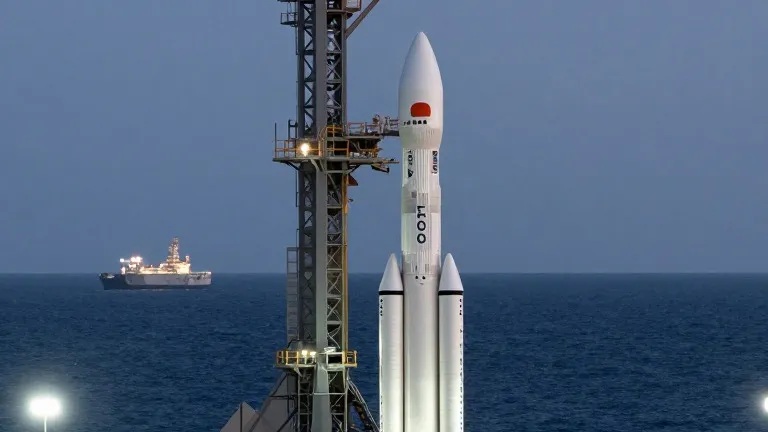
An 11-day interval between missions marks the longest recent pause in the Falcon 9 launch schedule, a shift that signals a structural change in SpaceX's operational focus. The gap followed the previous Starlink deployment, which itself had waited more than three weeks to launch, breaking a historical cadence of flights every two to three days.
On Oct. 23, a Falcon 9 rocket lifted off from Pad 4E at Vandenberg Space Force Base at 6:48 p.m. EDT. The vehicle carried 27 Starlink Group 15-15 satellites into low Earth orbit. This mission constituted the 116th Falcon 9 flight of 2026, with approximately 75% of the year's launches dedicated to the Starlink constellation.
The first stage booster, B1063, separated from the upper stage 2.5 minutes after liftoff. It performed a landing burn after eight minutes and touched down on the droneship "Of Course I Still Love You." This was the 36th flight for that specific booster, which previously launched NASA's DART mission in November 2021. The payload fairing was discarded just before the three-minute mark, and satellite deployment was scheduled to begin 62 minutes after liftoff.
SpaceX is reducing the frequency of Falcon 9 flights to prioritize the development of Starship. Starship is designed for full reusability and features a payload bay large enough for Version 3 Starlink satellites, which exceed the physical capacity of the Falcon 9. Once Starship enters operational service, the company plans to retire the Falcon 9 and Falcon Heavy variants almost entirely.
The 100th Falcon 9 launch of 2026, a Starlink mission from Cape Canaveral, was identified as the final Starlink flight from Florida's Space Coast. A similar transition is expected for the West Coast. This shift in strategy affects the annual launch count for the Falcon 9.
In 2025, the rocket completed 165 launches, setting a record for the most active year in its history. At the current rate of deployment, the Falcon 9 is projected to complete just under 150 missions by the end of 2026. This decline confirms that the 2025 total will likely stand as the peak for the vehicle.
Source: Space.com
More Business · Tech news · Business Complaints · Report a business · Got a Story?