Sudan's Fuel Crunch Drives Up Daily Costs for Workers and Businesses
Scarcity of petrol and diesel in Sudan is forcing a 40% hike in intercity bus fares and halting local trade, squeezing the budgets of millions of citizens.
By Kevin Sanders ·
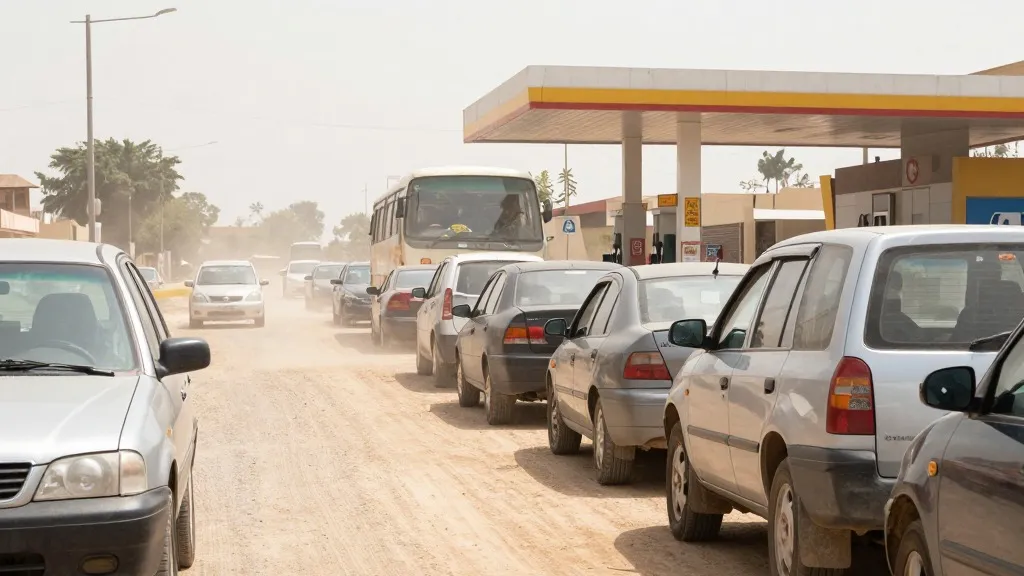
The most immediate impact of the ongoing fuel crisis in Sudan is the sharp increase in transportation costs that has forced the national transport union to raise intercity bus fares by 40 percent and minibus rates by 30 percent. This adjustment, implemented this month by the Sudan Transport Chambers Union, reflects the severe strain on the country's logistics network. For daily commuters and long-distance travelers, the price jump significantly reduces disposable income, particularly for those already coping with the economic aftershocks of the conflict that began in April 2023.
In Port Sudan, the shortage has altered the daily routines of public transport operators. Azhari Mohamed, a 60-year-old minibus driver who shuttles passengers between the Shagar district and the city center, now faces a grueling schedule to maintain his income. His vehicle consumes three gallons of petrol each day, a cost that amounts to roughly 105,000 Sudanese pounds. To secure enough fuel, he works two days and spends a third waiting in lines that can extend beyond five hours. Occasionally, the supply at the station runs out before he reaches the pump, requiring him to join a new queue from the back.
Once fuel costs are deducted from his earnings, Mohamed retains approximately 50,000 pounds daily. This amount must cover the living expenses for his wife and a daughter enrolled in university. The inconsistency of fuel availability makes stable income difficult, leading him to state that his primary need is simply consistent access to petrol so he can continue working.
The burden of higher fares falls heavily on service workers who rely on public transit to reach their jobs. Aziza Ibrahim, a 38-year-old cleaner in Port Sudan, has reduced her working days to three per week to manage her travel expenses. Before the war, her commute to the central station cost only 700 pounds. Today, fares on various routes range between 2,000 and 2,500 pounds. Her daily round trip now requires 11,000 pounds, which consumes nearly half of her monthly salary of 400,000 pounds. In addition to transport costs, she must also manage expenses related to diabetes treatment, sometimes borrowing money to get to work and repaying the debt once she is paid.
Macro-economic data indicates a deepening recession. The United Nations Development Programme reports that average incomes in Sudan have regressed to levels last seen in the 1990s. The Ministry of Energy and Petroleum estimated war-related losses at 20 billion dollars last year. A significant factor in the current fuel shortage is the disruption to domestic production. Attacks on the Balila oil field have hindered supplies to the Khartoum refinery, a facility that previously satisfied about 60 percent of the national demand for petrol and liquefied petroleum gas.
With local production declining, the country is increasingly dependent on imported fuel. This reliance coincides with a global energy crisis that has inflated prices for gas, petrol, and diesel. Sidi Ohaj, an economic analyst, notes that government regulations for importers have exacerbated the problem. Rules requiring importers to deposit 200 kilograms of gold in the Central Bank and own storage facilities have led some companies to exit the market. Ohaj argues that these measures reduced supply relative to demand and calls for urgent easing of import procedures.
The analyst also points to ongoing drone attacks on infrastructure and the wider geopolitical tension between the United States and Iran as factors disrupting global energy markets. These elements leave little prospect for a quick resolution to the domestic fuel shortage. The combination of reduced domestic output and high global prices creates a volatile environment for businesses and households alike.
Local commerce is also suffering from the rising cost of diesel and petrol. Ahmed al-Haj, a trader in Omdurman who packages skincare products, reports that the cost of moving a tonne of goods has increased by 30 to 50 percent. These additional expenses are passed directly to consumers in the form of higher product prices. When power outages force him to use fuel-powered generators, his daily operating costs rise even further.
The impact on distribution networks is evident in the shifting costs of local delivery. In Omdurman, a delivery that previously cost 5,000 pounds now ranges from 10,000 to 12,000 pounds. Reaching customers in other states has become nearly impossible for many traders. As transport and distribution workers reduce the number of trips they make, goods are accumulating at trading premises, signaling a slowdown in the broader commercial cycle.
Source: Al Jazeera