The Daily Set Lunch Is Fading, Threatening a Key Social Lifeline for Working Spaniards
Rising costs and shifting habits are squeezing the traditional midday meal, which serves as a vital gathering place for families and individuals across Spain.
By Kevin Sanders ·
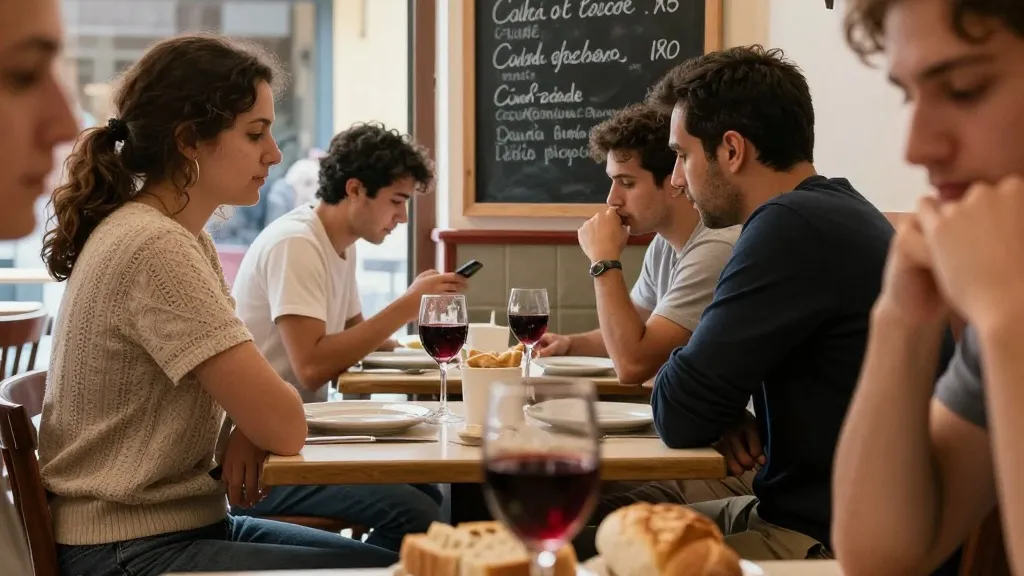
The traditional midday set lunch, a cornerstone of Spanish life for decades, is facing a slow decline as economic pressures and changing routines erode its daily presence.
Approximately four million of these meals are still served on any given weekday. However, the trend is reversing. In 2009, renowned chef Ferran Adrià declared the practice dead, citing economic downturns and the rise of bistro-style restaurants that charge between 20 and 30 euros for similar offerings. Seventeen years later, that prediction appears premature, though the habit is undeniably losing ground.
Spanish food journalist Lakshmi Aguirre recently published a book titled "Menú del Día: Everyday Scenes of a First Course, a Second Course and Pudding." The work traces the history of the tradition and argues that while it is in trouble, it has not yet disappeared.
The origins of the menu are rooted in mid-20th century tourism policy. In the 1960s, Manuel Fraga, the information and tourism minister under dictator Francisco Franco, devised the offer. The goal was to demonstrate to foreign visitors that food in the country was plentiful, affordable, and of high quality following the post-war period of scarcity. Establishments were legally required to provide a soup starter, a main course of meat, fish, or egg with a side, and a dessert of fruit, sweet, or cheese. Prices were fixed between 50 and 250 pesetas, and the accompanying quarter-litre of wine had to be pure Spanish red or white with at least 12% alcohol.
By the early 1970s, the offer was renamed to appeal to local Spaniards rather than just tourists. Today, so many people consume these meals that their origins are largely forgotten. Aguirre noted that many expressed shock when she mentioned Fraga during her research. She described the menu as a reflection of the country's evolving society and observed that nostalgia for the tradition is growing as its presence diminishes.
Several factors are driving the decline. The average price has risen to 14.70 euros. Many workers, short on time, now opt for quick meals, bringing food from home or microwaving supermarket products. Rising energy and food costs make it difficult for small, family-run restaurants to maintain a rotating daily menu. Some venues have switched to a single dish of the day, while others have incorporated Latin American staples to reflect the country's changing demographics.
Aguirre accepts these changes, noting that the menu has always mirrored the society that eats it. Her own ideal meal includes a vegetable stew, hake in green sauce or baby squid in ink, and a dessert like rice pudding. She evaluates venues by looking for simple dishes, a changing menu, fresh chips, and a regular clientele. She favors chalkboards that avoid trendy terms like avocado, burrata, or sourdough, and gives bonus points if an owner's child is doing homework at a table in the back.
For Aguirre, the stakes extend beyond the cost of a meal. She described the restaurant as a meeting point where families with limited means can dine out and people living alone can find company. The true value, she argued, lies not only in the affordability of the food but in the time provided to enjoy it.
Source: The Guardian