5 Grams: Experts Detail Failures in Tennessee Lethal Injection Attempt
Legal filings from the death chamber describe a nearly hour-long struggle by an IV team to find a usable vein before administering a fatal dose.
By Kevin Sanders ·
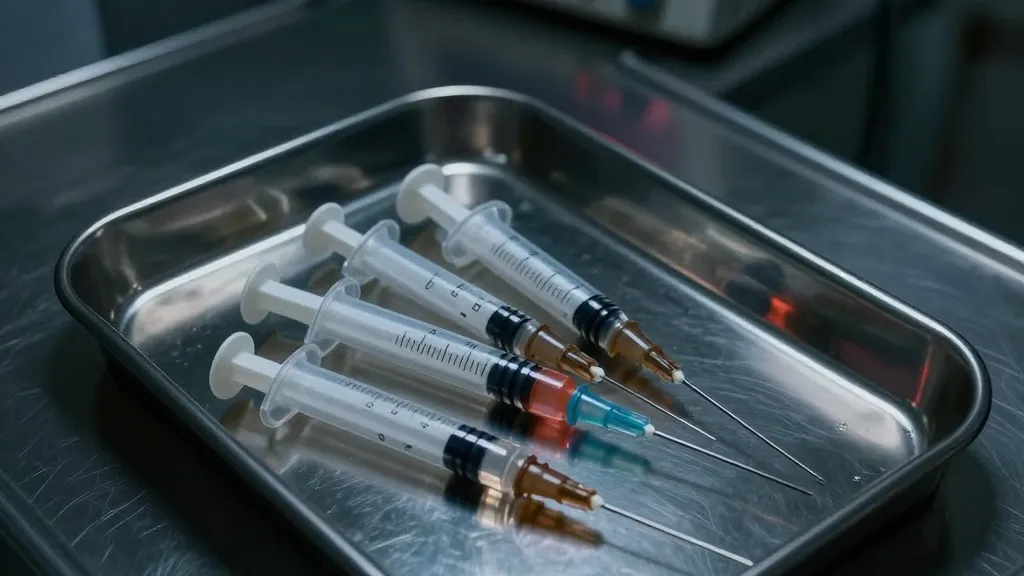
Medical experts are calling the conduct of Tennessee's execution team during Christa Pike's failed lethal injection a case of gross incompetence, stating the actions described would be considered malpractice in any clinical setting. The criticism follows the release of new details from legal proceedings regarding the events inside the death chamber on September 30. According to a chronology filed by Pike's lawyer, Randy Spivey, a team of four unidentified individuals spent almost an hour attempting to establish an intravenous line in Pike's arms prior to the administration of the sedative pentobarbital.
Jonathan Groner, an emeritus professor of clinical surgery at Ohio State University and an expert in execution methods, described the timeline as difficult to comprehend. 'I'm shocked and disturbed by what happened inside the death chamber,' Groner said. 'The level of incompetence is astounding, and difficult to comprehend.' He added that the account indicates no one was in charge and no plan was in place during the procedure.
The account details a repeated series of failed attempts to secure a line, with the team utilizing approximately 10 needles to access Pike's veins. At several points, the team expressed concern that Pike's veins might have 'blown.' Groner noted that the label on a pentobarbital vial instructs that infusion must stop immediately if a patient reports pain, yet the record shows Pike grimacing on multiple occasions and stating that her arm was 'really burning.'
At 7:05pm, roughly half an hour into the process, a team member requested a 24-gauge needle and proceeded to manipulate it extensively. Joel Zivot, a professor of anesthesiology and surgery in Atlanta who provided expert testimony prior to the execution, stated that this specific catheter type is intended for infants or small children. Under Tennessee's protocol, the procedure required the delivery of 50cc of pentobarbital into each arm for a total of 5g. Zivot said there is 'no way' to push a 50cc syringe through a catheter of that size without causing the vein to rupture.
Zivot listed several serious failings associated with the event, including a poorly written protocol, a lack of leadership, the potential unauthorized use of technology, and the selection of catheters far too small for the task. He also noted that the team attempted to locate a vein using ultrasound technology, a method Groner said requires extensive training to perform smoothly, asserting the team clearly did not possess the necessary proficiency.
At 7:23pm, saline was pushed through the line 'with difficulty,' a step Groner characterized as a critical warning sign. 'No clinician would give a caustic drug through an IV where it didn't flush easily,' Groner said. Despite this, the team concluded the IV was set one minute later and proceeded to begin the execution. Zivot added that the team pressed on when it should have stopped.
Following the failed execution, Pike spent several days on a ventilator and her lawyers initially assumed she was brain-dead. She remained in the hospital for 10 days before returning to her prison cell. She can now talk and walk, though her long-term health prospects remain unclear. Tennessee has suspended all executions pending a review, as the case prompts a reckoning over the death penalty nationwide.
Both experts stated the case exposes deeper issues regarding lethal injection, the primary method of execution in the United States. Groner characterized the process as a 'medical charade,' adding, 'The ultimate penalty in our country, whether one agrees with it or not, is death. It is not torture, then death.' Zivot stated that medicine is obsessed with safety and accountability, concluding, 'You didn't see any of those things in Pike's execution chamber.'
Source: The Guardian