Diesel Costs and Debt Squeeze 221 Trucking Firms Into Bankruptcy
Small carriers face a 40% exit risk as fuel prices, insurance hikes, and loan structures erode thin margins.
By Kevin Sanders ·
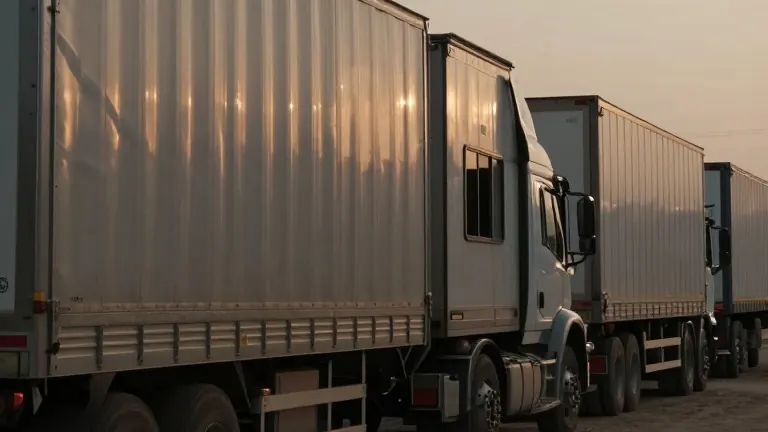
Small trucking companies are collapsing at a rate not seen in decades, driven by a convergence of high fuel costs, steep debt burdens, and tightening insurance premiums.
According to data compiled by Bloomberg, 221 trucking firms filed for bankruptcy in 2026. This figure extends a three-year trend of elevated insolvency. The pressure falls hardest on operators with 20 or fewer tractors, many of whom run only one vehicle. A survey by Truckstop and Bloomberg Intelligence found that roughly two-thirds of these small carriers report flat or declining revenue compared to the previous year. Nearly 40% of respondents said they expect to leave the industry or are uncertain of their status within six months.
The financial strain stems from the capital-intensive nature of the business. Many independent owners finance their rigs with variable-rate loans and merchant cash advances. These instruments expose them to rising interest rates and high repayment fees. When diesel prices spiked due to geopolitical conflicts, these operators could not absorb the cost increases as easily as larger, debt-free competitors. Christopher Ward, a bankruptcy partner at Lowenstein Sandler, noted that it is far easier for major firms like J.B. Hunt to offset fuel costs than for a mom-and-pop operation with five trucks.
Chip Lane, managing partner at Lane Law Firm in Texas, described a "massive uptick" in restructuring inquiries. His firm handles three or four trucking clients weekly. He attributes the wave to a "triple whammy" of higher fuel prices, rising interest rates, and burdensome credit structures. Many owners took on what he calls "bad money," including short-term, high-interest loans designed to cover shortfalls, which deepens their indebtedness.
Insurance costs have also surged, often triggered by a single accident or claim. Justin Stoneman, who operated Stoneman Trucking LLC out of central Michigan, filed for bankruptcy protection in May. He is now moving to Chapter 7 to shut down. An insurer quoted him $155,000 to cover two trucks and three trailers following an accident involving one of his drivers. Stoneman cited two merchant cash advances totaling approximately $125,000 taken in 2023 as a primary factor in his financial distress.
Industry experts point to additional pressures, including freight fraud and labor shortages. Jennifer Lockett, operations manager at factoring company altLINE, stated that fraudsters exploit stolen identification numbers to intercept loads. The Highway’s Freight Fraud Index estimates this activity costs the industry $18 million per day. Simultaneously, stricter English-language proficiency enforcement and immigration actions have reduced the pool of available drivers, further straining capacity for small operators.
The current downturn follows a post-pandemic contraction. During the economic boom of 2020 and 2021, low interest rates and high demand attracted new entrants. As rates plummeted, those newer firms struggled to find work. Now, the survivors face the same structural vulnerabilities that eliminated their peers, leaving few options to maintain profitability.
Source: Orange County Register
More Business · Business Complaints · Report a business · Got a Story?