PLD Space Sets 2027 Target for Miura 5 Debut
Spanish rocket maker says final integration is underway, while SpaceX declines three US military launch offers.
By Kenji Yamamoto ·
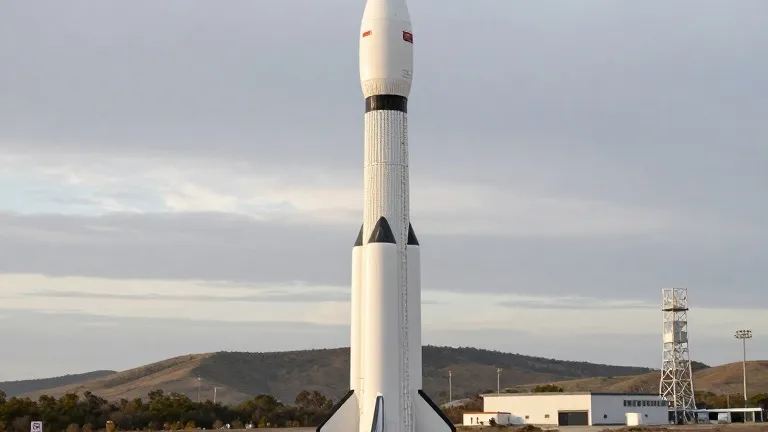
PLD Space is preparing its Miura 5 rocket for its first flight before the middle of 2027.
The Spanish company announced the schedule on October 23, marking a key milestone for its small-lift vehicle. This update comes as the company completes final assembly for the rocket, which is one of three units built for qualification purposes.
SpaceX also made headlines on the same day by declining three launch contracts offered by the United States Space Force. The company reportedly told the military branch it would not proceed with the work, a decision that stands out in the current commercial space market. This move occurred alongside new technical data from a NASA safety panel regarding the company's Starship vehicle.
That panel stated that Starship might require up to 22 refueling stops to support a lunar landing mission. This figure highlights the complexity of the proposed mission architecture for the large rocket.
Back in Spain, PLD Space CEO Raúl Torres provided details on the production status in an October 19 update. He explained that building three Miura 5 vehicles allowed teams to work continuously across different production stages. Torres noted that lessons learned from qualification campaigns are being applied directly to the launch vehicle. "Manufacturing these three vehicles has allowed our teams to work continuously across different stages of production and integration, applying the lessons learned from each qualification campaign directly to the launch vehicle," Torres said.
One second stage of the Miura 5 is now fully integrated. This stage is currently at PLD's test facility in Teruel, where it will undergo system-level testing. The qualification campaign includes a wet dress rehearsal and a static hot-fire test to verify performance under representative operating conditions.
In Canada, Reaction Dynamics is seeking to raise $350 million to expand its workforce from 68 to over 350 employees. The company is developing the Aurora small-lift rocket, which it aims to launch into orbit by 2028. It also plans to debut a medium-lift vehicle named Borealis by 2031.
Source: Ars Technica