Anthropic Targets Small Businesses with Claude Duet, a Work-Focused AI Agent
The new tool distinguishes itself from consumer assistants by prioritizing professional workflow automation and data-driven recommendations over casual errand handling.
By Kenji Yamamoto ·
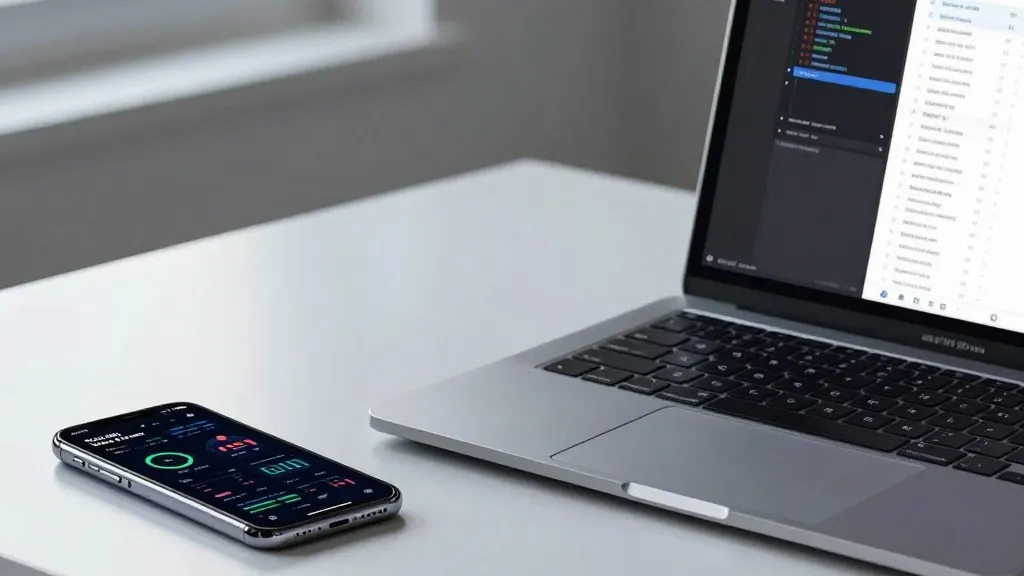
Anthropic is positioning its latest release, Claude Duet, as a serious contender in a rapidly saturating market for artificial intelligence assistants. The company aims to cut through the noise of weekly product launches by targeting a specific demographic: professionals and small businesses. By entering a space already occupied by rivals like Meta’s Muse, OpenAI’s Dots, and others such as Hark, Instinct, Grok Bot, and Fo, Anthropic is betting that users will prefer a tool designed specifically for professional productivity over general-purpose personal agents.
The central tension in this new launch lies in the distinction between a personal companion and a professional agent. Anthropic explicitly differentiates Duet from consumer-focused tools like Instinct, noting that the new app is not optimized for casual tasks like booking tickets or handling simple errands. Furthermore, unlike some competitors, Duet does not provide a live view of its browser activity as it operates, focusing instead on backend efficiency and structured output.
Instead of acting as a conversational partner for daily life, Duet is engineered to manage professional workflows. The agent can generate daily briefings, construct custom dashboards, and propose specific actions based on analyzed user data. It operates by executing tasks in the background within its own virtual environment, allowing users to continue their work without interruption. The system will only resurface to request approval if it encounters a decision point that requires human oversight.
This launch coincides with a broader industry shift away from passive chatbots toward active agents capable of executing work on a user’s behalf. Many of Anthropic’s competitors are making similar pivots toward business utility. For instance, while Meta’s Muse is primarily a personal assistant, the company has released a variant tailored for small businesses with deeper app integrations. Similarly, OpenAI’s Dots features a strong business orientation through its connections to professional software tools.
Anthropic emphasizes the proactive nature of Duet, which monitors ongoing tasks and delivers recommendations without waiting for direct commands. The system is built on the Claude Opus 5.5 model, providing a robust foundation for its reasoning capabilities. To facilitate seamless integration into existing digital ecosystems, Duet supports over 6,000 connectors and plug-ins available in the Claude Marketplace.
Financial transactions represent a key feature, but also a point of caution. Duet can execute online purchases on behalf of users through integrations with Stripe’s Link digital wallet and Shopify’s Shop Pay. However, the company has established clear boundaries to maintain trust. Sensitive steps, particularly payments, require explicit user approval. The agent is programmed to avoid trading securities or transferring funds between accounts, limiting its financial autonomy to direct purchasing actions.
Security and privacy are central to the app's architecture. Anthropic has introduced a new classifier designed to inspect every message to prevent the leakage of sensitive information. By default, the agent is configured to decline requests involving credit card numbers or government-issued identification, aiming to reduce the risk of data exposure in professional settings.
Claude Duet is currently available as an application for iOS and Android devices, as well as on the web via Claude.ai. Access is currently restricted to Pro and Max subscribers who are in the research preview phase. To try the new agent, users must join a waitlist, reflecting the company’s strategy to manage rollout and refine the experience before a wider release.
Source: TechCrunch · original report published