Fiesta Island engineered from bay silt
Public rejection of ocean dumping in the 1950s forced the city to build a disposal site within Mission Bay, resulting in a complex engineering project that took over two years to complete.
By Thomas Rogers ·
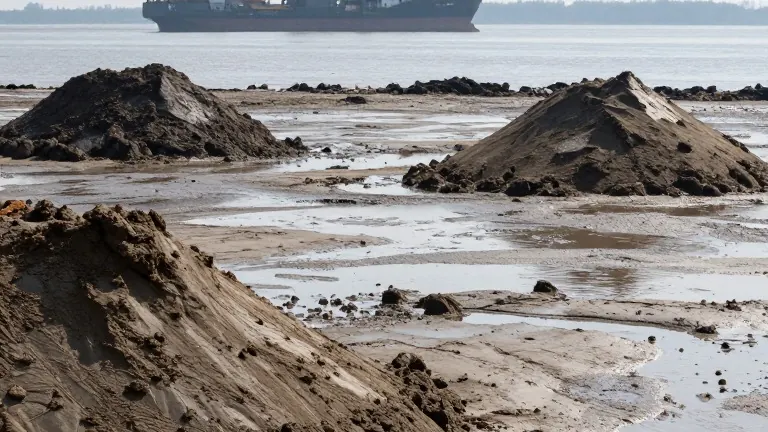
The site now known for water sports and dog walks began as a solution to a waste management crisis. The city of San Diego needed a place to put millions of cubic yards of soil excavated from Mission Bay after deciding against dumping it into the Pacific Ocean. That decision, driven by public outcry in the mid-1950s, led to the creation of Fiesta Island as a deliberate engineering project rather than a simple landfill.
Before the late 1940s, the area was a tidal marsh often called False Bay. As the city began transforming the waterway into a recreational park, dredging operations removed vast amounts of material. The City of San Diego reports that approximately 25 million cubic yards of sand and silt were dredged to shape the entire Mission Bay Park. This volume of material required a permanent and stable destination.
Early plans in 1956 and 1957 suggested dumping poor-quality soil directly into the Pacific. However, public hearings generated strong opposition to the proposal. Ed Gabrielson, the city engineer at the time, noted in his 1958 report for the Journal of San Diego History that this resistance pushed the city to look for a disposal area within the bay itself. By 1958, the plan included the construction of a new island to absorb the excess material.
The design called for precision rather than casual deposition. Gabrielson described a plan featuring 200-foot-wide sand levees around the island's margins. The contract drawings specified that a sand covering of at least 3 feet deep would be required. The plans mapped out specific shorelines, slopes, and zones for different types of sediment, ensuring the island would remain structurally sound.
Construction faced unexpected geological hurdles on the north side of the site. The underlying ground consisted of silty clay, which caused problems for the dredging crew. Gabrielson reported that the sand sank as much as 8 feet into the clay, creating a mud wave that extended outside the intended levee. To correct this, the city widened the dike and removed additional material to stabilize the structure.
The construction contract was awarded to Western Contracting Corp. The city solicited bids on June 12, 1958, and signed the agreement on Sept. 4, 1958. The primary piece of equipment, the dredge Western Eagle, was built in Kansas City, Mo. A 1968 California Court of Appeal opinion regarding a tax dispute notes that the vessel's construction was finished on Dec. 23, 1958.
The Western Eagle arrived in San Diego on April 30, 1959. Work under the Mission Bay contract officially began on May 6, 1959, according to Gabrielson's report. The project required heavy machinery to shape the land and manage the sediment flow. The timeline extended over two years as the crew dealt with the logistical challenges of moving such large volumes of earth.
Western Contracting completed the dredging phase on Aug. 1, 1961. However, the work was not fully finished at that point. Gabrielson noted that bulldozer and dragline operations continued after the dredging ended. The city formally accepted the completed work in November 1961. That acceptance marked the end of the engineering project that created the current landmass.
Source: Times of San Diego