The iPod's $399 Promise 25 Years On
Today marks 25 years since Steve Jobs unveiled a device that aimed to replace the entire CD collection with a pocket-sized player.
By Kevin Sanders ·
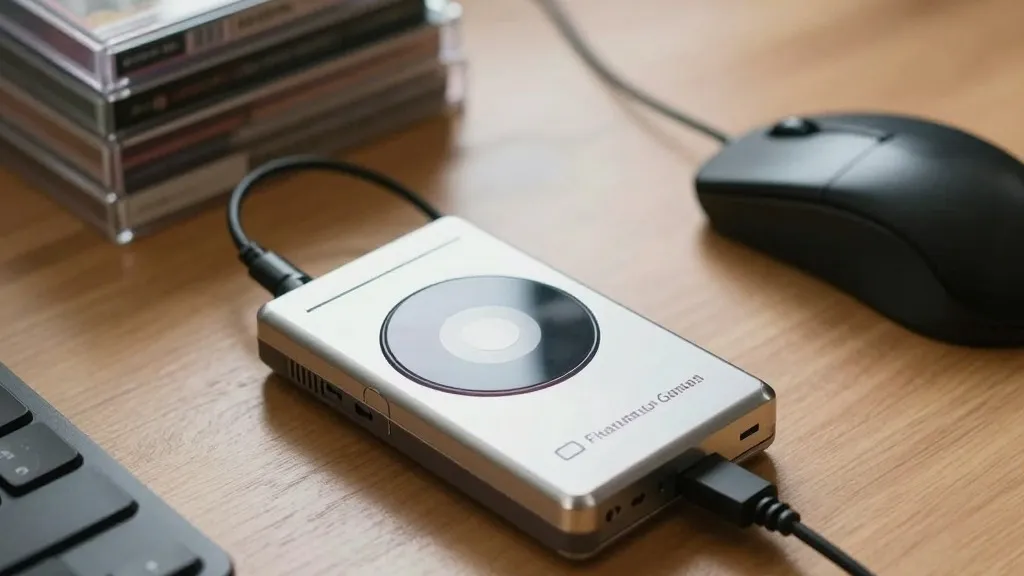
Twenty-five years ago today, Apple's leadership staged an unveiling that, at the time, appeared to be a diversion from the company's main path. On stage, the CEO introduced what he called a breakthrough digital device that was not a Mac. The product revealed was a pocket-sized music player, and it quickly became a constant companion for many gadget enthusiasts, right up until smartphones advanced to a point where they made such hardware unnecessary.
The central promise made at that launch, held on October 23, 2001, was the capacity to store a user's entire music library for a price of $399. To achieve this, the device relied on a 5GB hard drive capable of holding 1,000 songs. Specifically, this figure referred to 1,000 typical pop-song length MP3s at 160Kbps. For most people it's their entire music library, enthused Jobs.
Context for that launch is essential. By late 2001, Apple was still working to move beyond the beige era into the Mac OS X era, with iBooks and iMachines already established in the market. A revival of the Cupertino company's fortunes was well underway, with these iDevices doing well among consumers, at a difficult time, not long after the dot-com bubble burst. At that moment, Apple was navigating a difficult economic climate following the burst of the dot-com bubble.
The plan involved positioning the computer as the center of your digital lifestyle. It would serve as a hub uniting digital cameras, digital camcorders, DVD players, and a portable music player. Apple chose to pursue this avenue because everyone loves music and it's a huge target market, without a market leader, reasoned the CEO.
The reasoning for entering this specific market was based on a clear observation. Small companies like Creative and Sonic Blue, and the much larger Sony, already had portable digital music players. However, none of them has really found the recipe yet, for digital music, he told the crowd at the iPod unveiling. At the time of Apple’s iPod announcement, there were four mainstream portable digital music solutions: CD players, MP3 CD players, flash players, and hard disk-based jukebox players. Jobs saw that last one as the optimal choice for market entry.
Three specific claims were put forward to suggest the device would succeed. First, its ultra-portable form factor made it desirable. The design was aided by Toshiba’s newest ultra-compact and ultra-thin hard drive at 1.8 inches in diameter and 0.2 inches thick. The actual device would be the size of a deck of cards, 2.4 x 4 x 0.78 inches, with a weight of 6.5 ounces, lighter than most cell phones.
Despite this compact size, the device offered advanced features like 20-minute skip protection, fast file transfers, and charging via a single FireWire 400 cable. The connection was fast enough to transfer an entire CD to the device in five to 10 seconds, according to Jobs’ presentation. The USB connections of the same era would keep you waiting around five minutes for the same single CD of MP3s data transfer to complete, it was claimed. To fill the device, 1,000 songs, it was estimated it would only take 10 minutes, compared to five hours for a USB digital music player.
The second breakthrough concerned the physical construction. The device benefitted from an amazing Apple design, with minimal and durable back and sides, noted Jobs. Its specially designed controls were single-hand friendly, with an accelerated scroll wheel using a piezoelectric clicker for tactile feedback. It enabled the fast location and playback of music by playlist, artist, or song.
The third breakthrough claimed by Jobs was its Auto-Sync with iTunes digital music libraries feature. iTunes 2 launched on the same day with several advanced features like MP3 CD burning and syncing support for the new music player. However, the Auto-Sync meant that the libraries you created, customized, and curated on your Mac would always be synced with your pocket player when you connected to transfer music or charge. The first iPhone launched over five years later, in early 2007. Both devices would sit alongside each other in the Apple product stack for over a decade. The product line was left unmaintained but was only officially discontinued in May 2022.
Source: Tom's Hardware · original report published