Trump Orders AI Data Centers to Share Energy Dividends with Local Residents
By Kenji Yamamoto ·
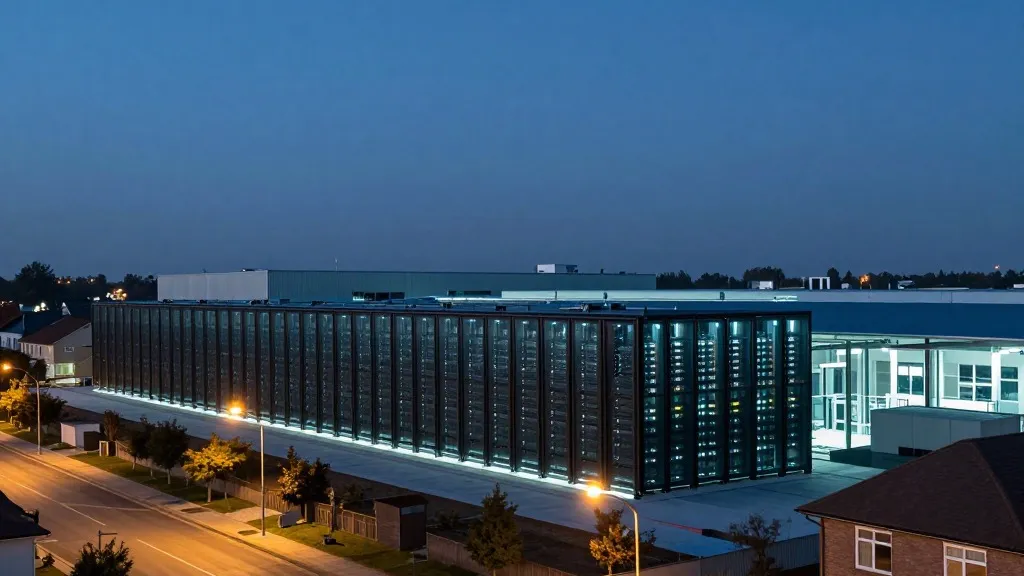
The expansion of artificial intelligence infrastructure has become a central point of contention between technology developers and the municipalities where they operate. On Tuesday, President Donald Trump issued a directive calling for data center builders and major AI hyperscalers to provide a financial or energy dividend to the local communities they impact. This move is designed to offset rising electricity prices and potentially reduce local utility costs, thereby making the presence of these facilities more acceptable to residents.
In a post on Truth Social, the President outlined the specific terms of this new approach. He stated that data centers would be required not only to generate their own electricity, a requirement previously established by the administration, but also to distribute or sell any excess power back to the local grid. The goal is to prevent energy price hikes and, in some cases, lower the overall cost for households in the vicinity of these facilities.
The directive addresses a growing list of grievances held by communities across the United States. Local residents have frequently protested against AI data centers due to their significant environmental and economic footprint. Common complaints include escalating electricity bills, noise pollution from cooling systems and generators, water shortages, air quality concerns, and local deforestation. These issues have made the construction of new data centers a difficult proposition for many small towns and suburban areas.
The Trump Administration views this strategy as a necessary step to maintain the United States' competitive edge in the global AI race against China. By requiring these large corporations to contribute to the local economy or infrastructure, the administration hopes to win back public favor. The proposed dividend is likely to take the form of partial payment toward rising electricity costs, directly alleviating a primary pain point for homes located near data centers.
This requirement builds upon recent legislative and executive actions. A recently passed act has already mandated that data centers bear the cost of necessary grid upgrades, preventing these expenses from being shifted to local taxpayers. The new energy dividend initiative complements this by ensuring that the power generated on-site, often in excess of immediate needs, benefits the surrounding area rather than simply being sold to the broader market at a premium.
President Trump emphasized the economic incentive behind the mandate in his social media post. He noted that data centers, which were previously unpopular in certain areas, have become highly favored when a financial agreement is reached. He urged developers to "MAKE DEALS, and get them built!!!" indicating a strong desire to accelerate the pace of construction while smoothing over local opposition.
However, the effectiveness of this dividend remains to be determined. While the economic benefit addresses one facet of the problem, it does not resolve other significant challenges. Issues such as enormous water consumption, ecological damage, and persistent pollution remain major obstacles. These factors continue to make AI data centers a difficult sell in many locations, regardless of the financial compensation offered.
The administration’s approach suggests a shift toward a model where the benefits of advanced technology are more evenly distributed among the local stakeholders. By tying the financial success of hyperscalers to the well-being of their neighbors, the government aims to create a sustainable framework for future data center development. The practical implementation of these energy-sharing agreements will be closely watched by both industry leaders and community advocates in the coming months.
For now, the directive stands as a formal call to action for the tech sector. Companies are expected to negotiate these deals to secure the social license to operate in key regions. The success of this initiative will depend on whether the proposed energy dividends are sufficient to outweigh the perceived drawbacks of hosting massive computational facilities.
Source: Tom's Hardware · original report published