Biddy Mason's name moves to Pershing Square as new biography launches
Los Angeles officials renamed a major plaza and subway station for the 19th-century philanthropist while a new book details her life.
By Thomas Rogers ·
Los Angeles residents will see new signage for Pershing Square and its subway station in the coming months. The city council voted on Sept. 4 to rename the 5-acre plaza Biddy Mason Park. The LA Metro board made a similar decision for the station on Oct. 22. These changes honor a Black woman who lived in the area from the mid-1800s until her death in 1891.
The naming follows the release of a new biography by Kevin Waite. Waite is a history professor at the University of Texas at Dallas. His 444-page book, titled The Boundless Biddy Mason, examines Mason's life. Mason was born into slavery in Georgia around 1818. She was later sold in Mississippi and forced to walk to San Bernardino in 1851. Waite describes this journey as the longest forced migration in American history.
Mason gained her freedom on Jan. 19, 1856, after a judge in Los Angeles ruled in her favor. She subsequently became a midwife, a real estate developer, and a philanthropist. By 1870, she was the wealthiest African American in Los Angeles. At her death, her estate was valued at $100,000. That amount is equivalent to about $4 million today. She owned property along Spring Street and Broadway, including a brick commercial building known as Mason Block.
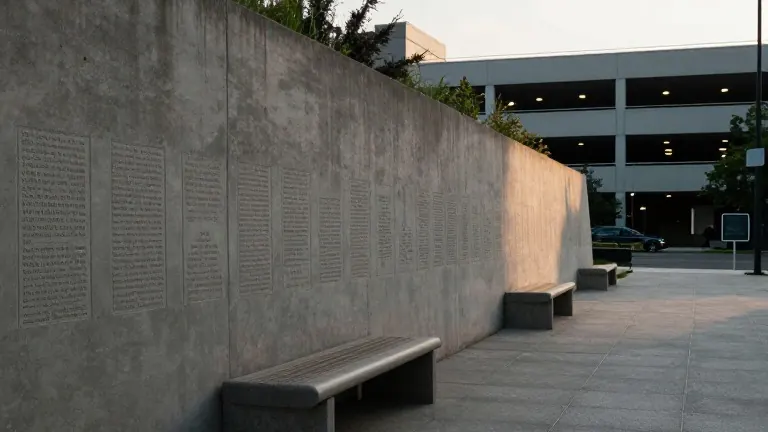
A memorial wall currently stands in a pocket park at 333 S. Spring St. This 80-foot structure features a timeline of her life and impressions of objects like an agave leaf and a wagon wheel. The park was created in 1989 on land Mason once owned. Waite visited the site on Monday to discuss the new book. He noted that the small park is often overlooked by the public.
Some local traditionalists opposed the renaming of Pershing Square. They argued that Mason already has a memorial nearby. Waite countered that the small park is not publicly owned and is difficult to find. He stated that Pershing Square would be the first public space in Los Angeles named for Mason. Mason was separated from her family and walked thousands of miles with her owner, Robert Smith, a Mormon leader. Smith held 14 enslaved people in California, making him the largest slave holder in the state at the time.
Mason died in 1891. She left no letters or diaries, which makes historical research difficult. Waite holds a book talk at the San Bernardino County Museum on Nov. 5 at 7 p.m. Tickets cost $20. The event marks the final day of a series of discussions surrounding the release of the new biography.
Source: Orange County Register