Hebron Raids Displace Hundreds Amid Election
Israeli forces have leveled homes and sealed the city following a deadly checkpoint attack, with displacement figures climbing as political tensions rise.
By Thomas Rogers ·
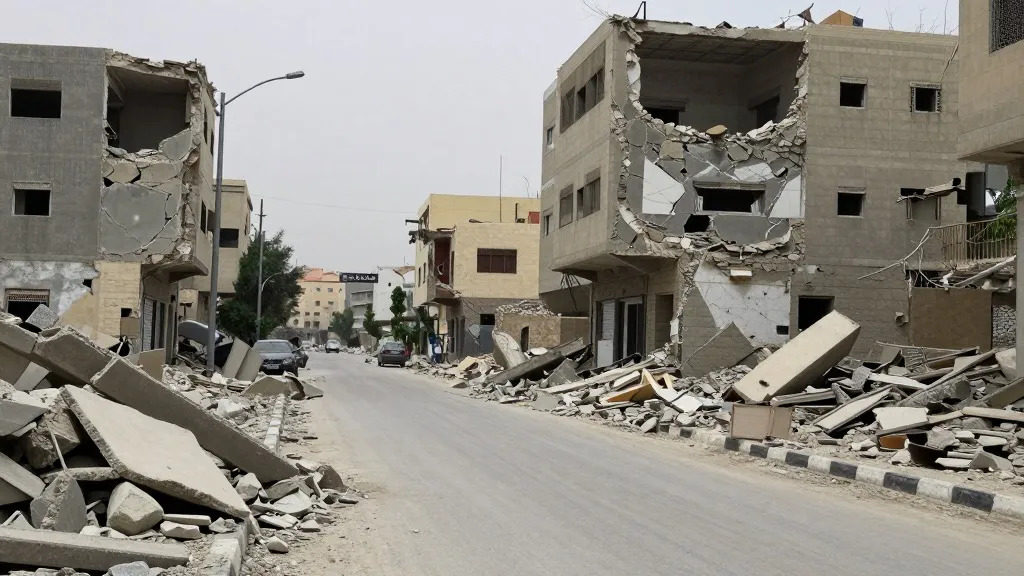
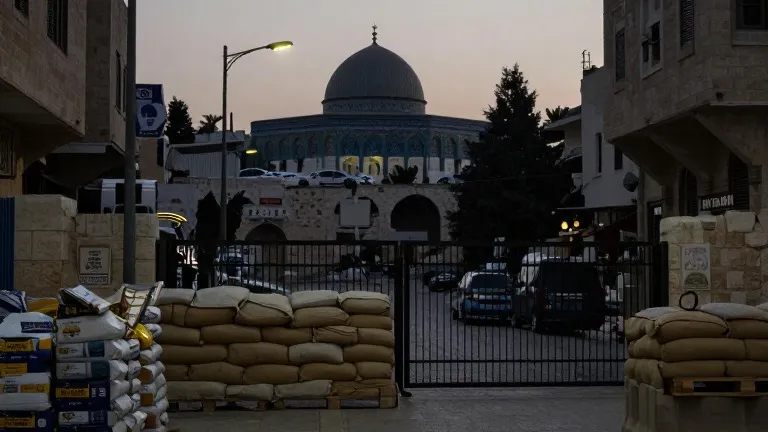
Tensions in the occupied West Bank spiked sharply following a deadly attack at a checkpoint, prompting Israeli forces to launch a large-scale operation in Hebron that has leveled homes and displaced hundreds of families. The military has sealed off the city, severely restricting the movement of its 200,000 residents, while footage circulating online depicts bulldozers tearing through structures and at least one street reduced to rubble. The Israel Defense Forces did not immediately respond to a request for comment but stated on social media that it was operating against dozens of targets across the West Bank.
The operation was announced by Prime Minister Benjamin Netanyahu on Friday, following an incident in which two Israeli soldiers were killed by two Palestinian gunmen. Three other soldiers were wounded in the attack, and both gunmen were killed. Netanyahu stated that buildings near the checkpoint, along with the neighborhoods the gunmen came from, would be "destroyed". The prime minister traveled to Hebron wearing protective armor and posted a video from the scene, declaring, "We will evacuate the residents, go house to house, remove the weapons we find there, and deal with and destroy all terrorist infrastructure."
Local officials reported significant damage to the city's infrastructure. Hebron's Mayor Youssef al-Jaabari stated that the operation was focused on the Ein Deir Baha and Farsh al-Hawa neighborhoods, striking homes, businesses, and industrial sites. He noted that houses had been spray-painted for demolition and that dozens of families were forced to spend the night outdoors, with some told to leave without their vehicles. While the mayor believes the military intends to displace 2,500 people from roughly 0.35 sq km of urban land, the city's governor and deputy mayor confirmed that at least 200 families have been displaced thus far.
The timing of the military activity coincides with Israel's general election, which is scheduled for four days from the date of this report. Netanyahu, whose campaign focuses on a promise of security, canceled Friday morning's party events to travel to Hebron. The prime minister also announced he had reviewed plans for the largest military operation in the West Bank since 1967, though he did not specify when it might occur, leaving it unclear if the current Hebron operation is part of those plans. In an interview released Saturday with Israel's i24 television channel, he also threatened "a very big surprise" regarding the Palestinian Authority, which governs parts of the territory.
Reactions have varied from condemnation to calls for broader conflict. The Palestinian Authority called for "urgent international action that went beyond condemnation" to stop further forced displacement. Within Israel, Finance Minister Bezalel Smotrich urged a campaign in the West Bank "exactly like in Gaza or Lebanon", while National Security Minister Itamar Ben Gvir called for the Palestinian Authority to be dismantled. Israeli rights groups have criticized the practice of demolishing homes of Palestinians suspected of attacking Israelis, labeling it as collective punishment.
Mayor al-Jaabari told journalists that the operation was "driven by the elections" and that Netanyahu and his ministers were trying to win the votes of the far right and of settlers. Netanyahu has compared the Hebron operation to earlier campaigns in Palestinian refugee camps in the north of the territory, where the military destroyed hundreds of homes and displaced tens of thousands of people in 2025. The Israel Defense Forces have stated that operations will continue for several days.
The coming days will see the continuation of military activity across the West Bank as the army proceeds against what it identified as dozens of targets. As the general election approaches, the political ramifications of the operation and the displacement of residents in Hebron will likely remain a focal point of public debate.
Meanwhile, the question of whether the Hebron operation is a precursor to the larger military campaign Netanyahu reviewed remains unanswered. The prime minister has threatened a "very big surprise" for the Palestinian Authority in an upcoming interview, signaling further developments regarding the governance of the territory. The Israel Defense Forces has indicated that its current activities will persist for several days, while local officials continue to assess the extent of displacement and damage to infrastructure.
Source: BBC News