Israeli election results force a choice between a minority government or a repeat vote
With Likud and Yashar both short of a majority, coalition talks will hinge on whether centrist Gadi Eisenkot can secure support from Arab-led parties.
By Kevin Sanders ·
Israelis faced a period of intense political uncertainty on Wednesday after preliminary election results showed that neither Prime Minister Benjamin Netanyahu nor his top challenger, Gadi Eisenkot, possesses the 61 Knesset seats required to form a government. The 120-seat parliament is currently divided, with no single bloc able to command a majority, leaving the door open for weeks of difficult negotiations or a return to the ballot box within months.
The current political impasse stems from the 2022 election, which brought Netanyahu back to power with a far-right alliance. That government has faced growing criticism over the conduct of the war in Gaza, the handling of the hostage crisis, and military draft exemptions for the ultra-Orthodox population. Voter anger over these issues was evident in the recent turnout, which reached nearly 78%, the highest level recorded since 1999. Despite this high engagement, the opposition failed to consolidate enough support to unseat Netanyahu outright.
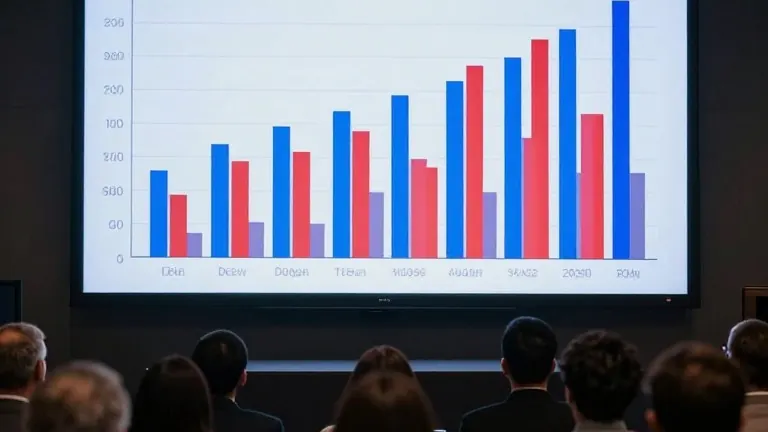
Preliminary data with 85% of votes counted indicates that Netanyahu's Likud party holds 20.8% of the vote, while Eisenkot's Yashar party holds 16.1%. Arab-led parties captured 14.9% of the vote, a historic showing that positions them as a decisive factor in coalition building. Local media projections suggest Likud and its allies have 53 seats, Yashar and its allies have 48, and Arab-led parties have 19. The count of approximately half a million absentee ballots from military personnel and diplomats will continue until Thursday evening.
President Isaac Herzog, who must appoint the leader tasked with forming a government, said he would work to avoid another round of elections. He stated, "We must do everything we can, certainly after yesterday, to avoid another round of elections." Eisenkot has signaled openness to partnering with Arab-led parties if they recognize Israel as a Jewish state and Hamas as an extremist group. Netanyahu, conversely, has dismissed such a partnership as treasonous and warned against a "dangerous government" that includes them.
The political landscape is further complicated by the stance of Netanyahu's far-right allies, including National Security Minister Itamar Ben-Gvir, whose support appears to be waning. Ben-Gvir has become a polarizing figure, often cited by critics as representing the most extreme elements of the current administration. If Eisenkot can secure the cooperation of Arab parties and moderate allies, he may form a stable government. Otherwise, Israel risks repeating the cycle of five elections held between 2019 and 2022.
Voters in Tel Aviv and Nazareth expressed mixed emotions about the potential for an Arab-Jewish coalition. Mansour Abbas, leader of the United Arab List, declared, "We are here, we are not on the sidelines." Hanna Doukhan, a voter in Tel Aviv, noted that forming a government without Arab parties seems increasingly unlikely. Meanwhile, Netanyahu's supporters argue he remains the only leader capable of managing Israel's security challenges and international relations effectively.
The next steps depend on whether Eisenkot can persuade his likely partners to accept an alliance with Arab-led parties. If a majority cannot be assembled, new elections could be held early next year. The outcome will likely determine the trajectory of Israel's foreign policy, domestic judicial reforms, and military conscription policies for the coming years.
Source: The San Diego Union-Tribune