New Research Finds Moon Water Reserves Support Only 10,000 Residents
Harvard and Durham scientists calculate that current lunar ice estimates allow for small settlements, but not the million-person cities envisioned by major space executives.
By Kevin Sanders ·
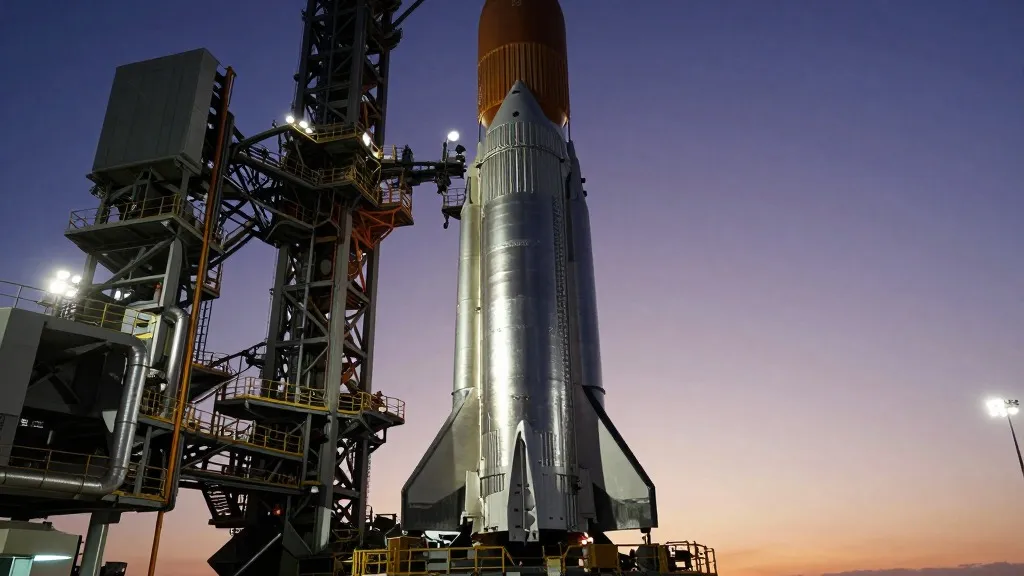
SpaceX and Blue Origin have outlined plans for large-scale lunar habitation, but a new analysis suggests the moon's water supply cannot support that scale. The study, published in the journal Frontiers in Space Technologies, examines the physical limits of power and water availability on the lunar surface.
The research was led by Martin Elvis, a senior astrophysicist at Harvard University, and Jonathan McDowell, an honorary professor at Durham University. They evaluated claims made by industry leaders, including Elon Musk, who stated in February that a self-growing city on the moon could be built in under 10 years. Jeff Bezos has also claimed that millions of people will live in space by 2045.
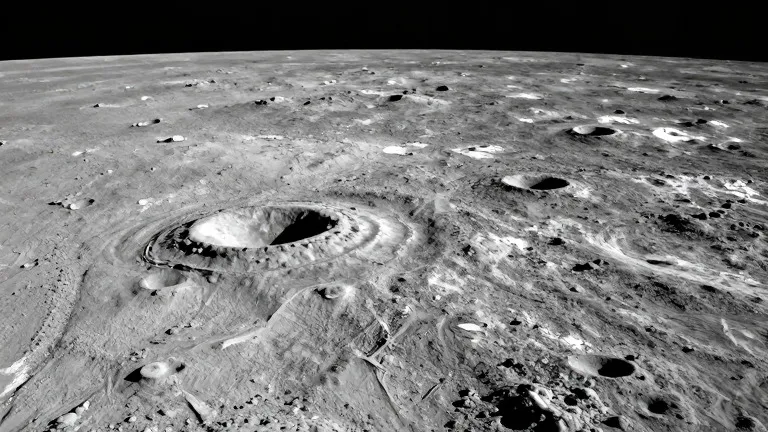
The researchers determined that power generation is feasible for a large population. Solar and nuclear sources could sustain one million people. The primary constraint is water. Estimates suggest roughly one billion tonnes of ice exist in permanently shadowed regions at the moon's poles. Under the assumption that 98 percent of water is recycled, a population of one million would exhaust this supply in approximately 100 years.
A settlement of 10,000 people, however, could remain sustainable for centuries based on the same calculations. Elvis described the available water as a small lake, noting that such a volume is insufficient to supply a major city for a long period. McDowell stated that if the goal is to build sprawling cities, new methods to transport water to the surface are required.
The study's assumptions may be optimistic. Elvis estimated that the total water figure is likely 20 to 30 times too high. He suggested that only 1 percent of the initial estimate is realistically recoverable, which would reduce the lifespan of a million-person settlement from 100 years to one. Additionally, the physical state of the ice remains uncertain.
Gordon Osinski, a professor of planetary geology at Western University, noted that satellite measurements contain uncertainties. He believes the water is present but requires ground confirmation. Osinski suggested the ice might resemble Arctic permafrost, consisting of sub-millimetre crystals mixed into soil, which would make extraction difficult. The research provides a baseline for engineering future lunar infrastructure.
The findings offer a concrete metric for planners rather than a definitive barrier to exploration. McDowell emphasized that the data serves as a guide for what is technically possible. The study quantifies the resources available under current estimates, allowing engineers to design systems that align with the moon's actual physical constraints.
Source: CBC News