Russian Aid Spurs North Korean Drone Boom
New reporting details how Moscow supports Pyongyang in mass-producing attack drones and refining ballistic missile accuracy.
By Thomas Rogers ·
The military balance in the region is shifting as new data emerges regarding the rapid expansion of North Korean air power. According to a report by The New York Times, Pyongyang has begun mass-producing attack drones while simultaneously upgrading its ballistic missile capabilities. This development is driven by a deepening strategic partnership with Russia, where Moscow shares military technology in exchange for personnel and weaponry.
The formal renewal of this military cooperation followed Russia’s full-scale invasion of Ukraine. Since that point, North Korea has used Russian assistance to modernize its armed forces. A key milestone occurred in early October when Pyongyang tested a tactical ballistic missile designed to carry a nuclear payload. While North Korea claimed the weapon traveled 1,000 km (621 miles), South Korean and Japanese analysts estimated the range at approximately 700 km (430 miles).
Seoul’s response to this test marked a departure from its usual diplomatic stance. Instead of issuing a brief statement describing the launch as provocative, South Korea conducted its own test of a hypersonic ballistic missile five days later. President Lee Jae Myung observed the exercise, which signaled growing unease over the speed of North Korea’s technological progress.
Analyst Anton Ponomarenko noted that access to Russian deployment data and feedback has been critical to this advancement. He explained that this information allows North Korea to enhance the accuracy and maneuverability of its weapons, creating a more substantial threat to its southern neighbor. The collaboration extends beyond missiles to include the development of unmanned systems. North Korea has observed how inexpensive drones can overwhelm expensive air defense networks in Ukraine and the Middle East, prompting it to adopt similar tactics.
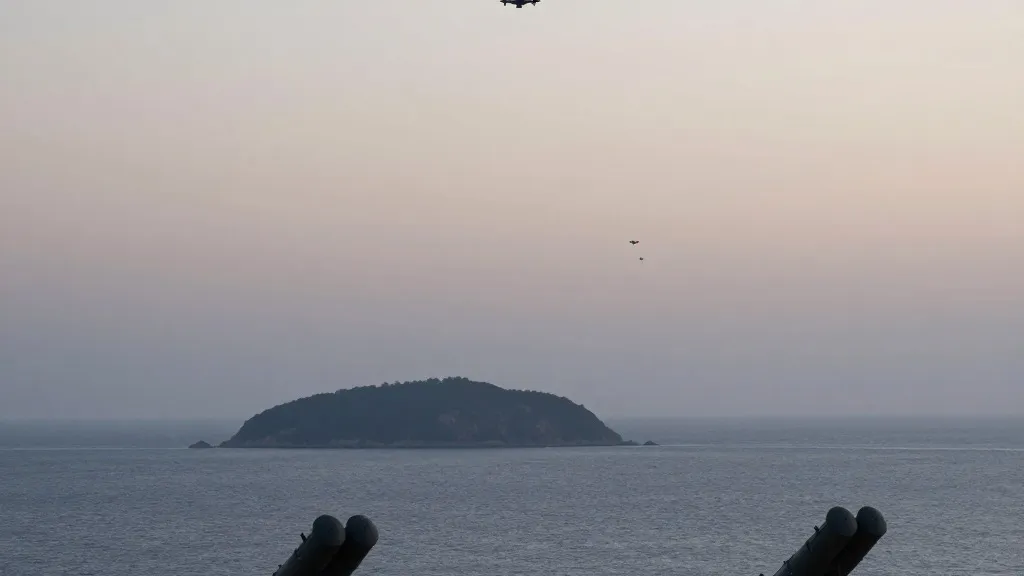
During a military drill last month, a swarm of drones attacked a target island while cruise and ballistic missiles struck from different directions at the same time. This combined approach suggests a new operational doctrine. The report argues that such evolving tactics will eventually force South Korea and its allies to redesign their air defense systems at significant cost.
These findings align with other recent accounts of the partnership. In September, Bloomberg reported that Russia is using North Korean citizens to produce military drones, with up to 25,000 workers believed to be employed at Russian military plants, including facilities in Alabuga, Tatarstan. Additionally, a North Korean missile unit capable of operating 120 ballistic missiles and six launchers has begun deploying in western Russia.
The partnership has seen continued activity throughout 2026. In June, North Korea announced tests of a modernized 240mm multiple-launch rocket system, a tactical ballistic missile, and a 155mm long-range artillery shell. Earlier in August, Russia reportedly requested KN-30 ballistic missiles from Pyongyang. These events illustrate a steady trajectory of increasing military integration and shared capability between the two nations.
Source: Ukrainska Pravda