Violence Returns to Tirana Streets as Protests Turn on State Buildings
Clashes between police and thousands of demonstrators in the Albanian capital left over three hundred people injured and dozens detained on Saturday.
By Kenji Yamamoto ·
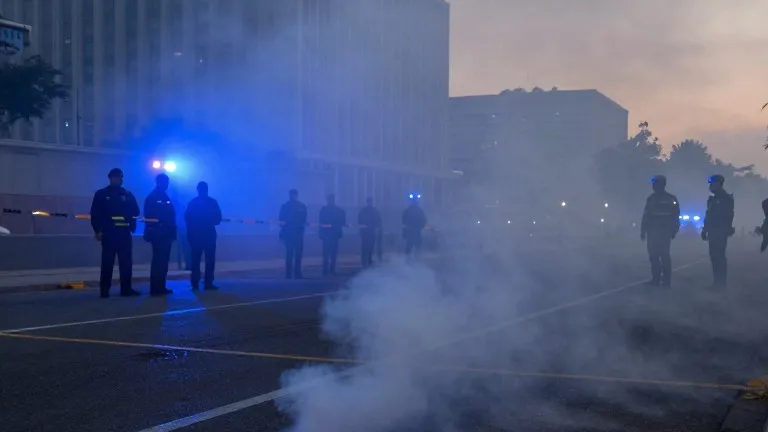
More than three hundred people sustained injuries during violent confrontations in Tirana on Saturday, as law enforcement deployed tear gas and water cannon to break up a large antigovernment gathering. The clashes resulted in the arrest of dozens of demonstrators and saw several state facilities take damage. This latest incident marks a sharp escalation in a cycle of unrest that has persisted since mid-October.
The demonstrations have roots in widespread dissatisfaction regarding the deteriorating state of local schools and the soaring cost of living in the Balkan nation. While the situation in the capital had appeared to stabilize in the days prior to Saturday, the momentum returned with force. Organizers issued a call for students and citizens from across the country to participate, drawing thousands to the streets. Police responded with a show of force, utilizing rubber bullets alongside chemical agents to manage the crowd.
The Ministry of Education building became the primary target for angry participants. Protesters hurled stones at the structure and pushed burning trash bins toward its entrance. The building has served as a symbolic center for the movement, reflecting the public’s frustration with the quality of public services and educational infrastructure in the country.
The rally featured broad coalition support, with university faculty, artists, and opposition political parties all announcing their intent to join the march. In preparation for the event, security forces tightened their presence around the capital. Local media outlets reported that vehicles entering the city were subjected to thorough inspections, highlighting the high level of alertness among authorities.
This unrest is part of a larger wave of antigovernment sentiment that has surfaced intermittently since May. That initial spark was ignited by the revelation of a luxury hotel development connected to the family of United States President Donald Trump. The anger has since broadened into a general campaign against perceived corruption and economic strain. A central demand of the protesters is the resignation of Prime Minister Edi Rama, who belongs to the Socialist Party.
Prime Minister Rama has attributed the chaos to outside influences, specifically accusing Russia and Iran of fueling misinformation online. Despite these accusations, he has signaled a desire for conversation. On Saturday, red cushions were arranged outside the government headquarters as a symbolic gesture inviting dialogue. The protesters, however, rejected the offer by setting the cushions ablaze. The movement continues to criticize the entire political establishment, with some signs in the crowd targeting Rama’s main rival, the centre-right leader Sali Berisha.
The outlook for stability remains uncertain as the government balances the need for security with the pressure to address the grievances of a diverse and determined opposition. The repeated clashes suggest that a resolution may still be some distance away.
Source: Al Jazeera